
Last updated: June 26, 2026
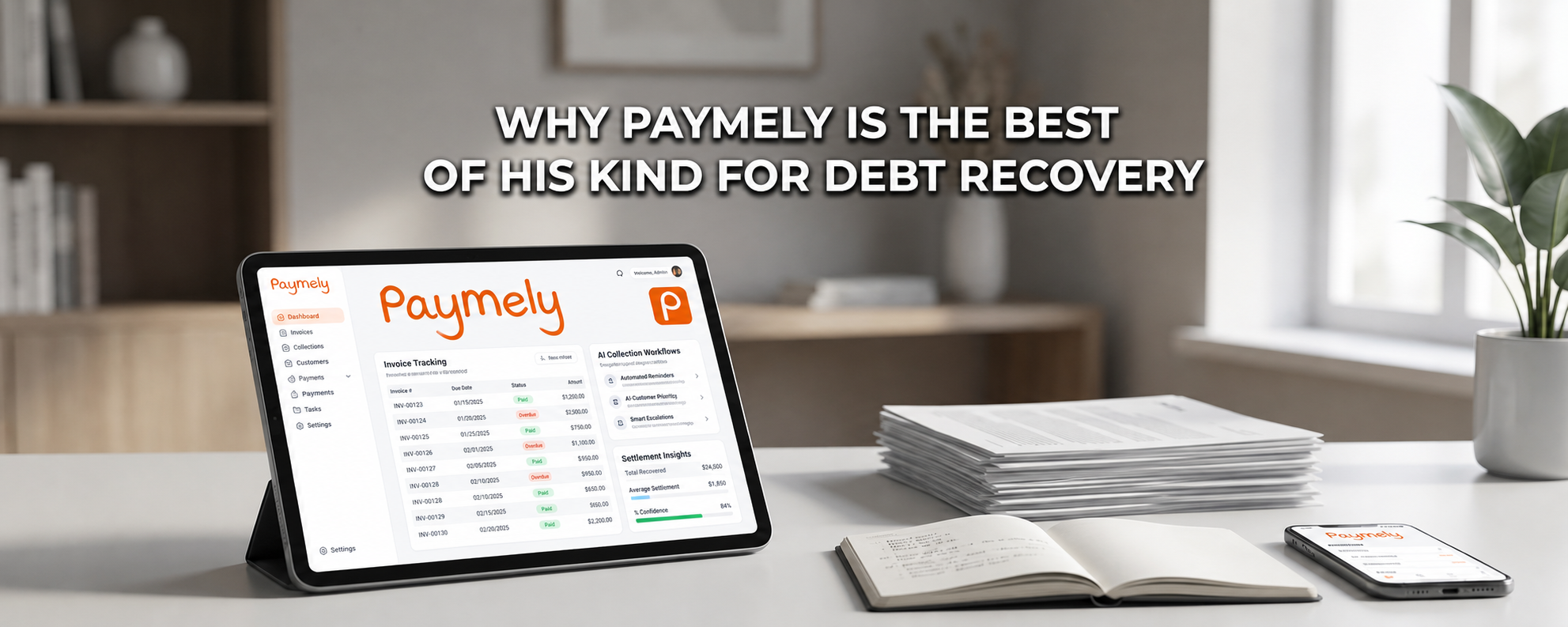
Quick Answer: Paymely is an AI-powered debt recovery platform that automates the entire collections workflow — from reading debtor emails to sending adaptive follow-ups — without requiring a dedicated collections team. It is built specifically for finance professionals and business owners who need to recover unpaid invoices faster, with less manual effort, and at no upfront cost. For companies drowning in overdue receivables, Paymely addresses the core problem: most unpaid invoices go unresolved not because debtors refuse to pay, but because consistent, intelligent follow-up never happens.
Key Takeaways
Paymely uses AI to read, interpret, and respond to debtor emails automatically, detecting intent and adjusting communication tone accordingly.
The platform is designed for finance and collections teams that manage recurring invoice follow-up at scale.
It automates the full debt recovery workflow, reducing the manual burden on accounts receivable staff.
Paymely is available at no cost to start, making it accessible for small and mid-sized businesses without large collections budgets.
The AI adapts its follow-up sequences based on debtor behaviour, meaning it doesn't just send generic reminders — it responds to context.
It is not a debt collection agency and does not take legal action; it handles the communication layer of collections.
Companies that rely on manual email follow-up, spreadsheets, or ad hoc reminders will see the most immediate benefit.
Paymely's approach prioritizes preserving the customer relationship while still recovering funds — a balance that aggressive third-party collectors rarely achieve.
What Is Paymely and What Problem Does It Actually Solve?
Paymely is an AI-powered collections assistant that automates the communication side of debt recovery for businesses. It handles the repetitive, time-consuming work of chasing unpaid invoices — reading debtor responses, understanding their intent, and sending contextually appropriate follow-ups — so your finance team doesn't have to.
The problem it solves is deceptively simple but operationally painful: most businesses lose money on overdue invoices not because they can't collect, but because they don't follow up consistently enough. A single overdue account might require five to eight touch points before payment is made. Multiply that across dozens or hundreds of open invoices, and the manual workload becomes unsustainable for any team that isn't exclusively dedicated to collections.
Paymely sits between your accounting system and your debtor's inbox, acting as a tireless AI coworker that never forgets to follow up, never sends the wrong tone at the wrong time, and never lets an invoice fall through the cracks.
You can explore the platform directly at Paymely's official site to understand the current feature set and on-boarding process.
How Does Paymely's AI Engine Actually Work?
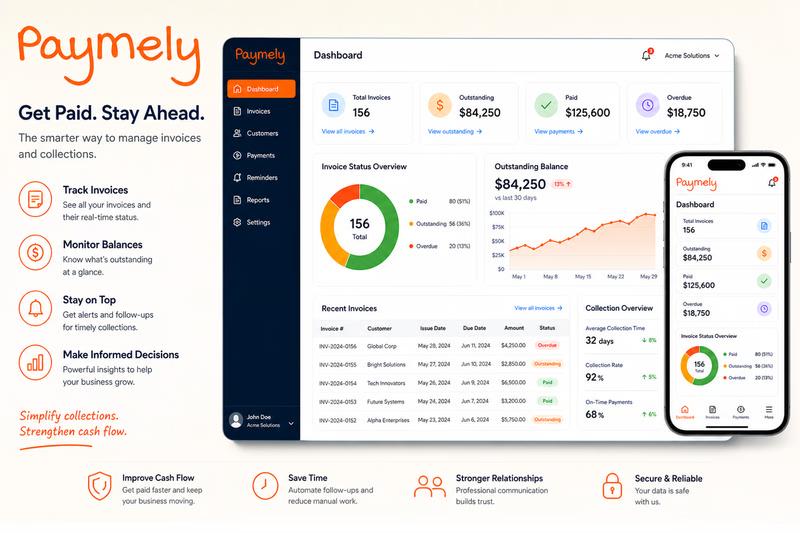
Paymely's core functionality is built around three interconnected AI capabilities: email reading, intent detection, and adaptive follow-up sequencing.
Email reading means the system doesn't just send outbound messages — it actively monitors and parses inbound replies from debtors. When a customer responds to a payment reminder, Paymely reads that response and understands what it means in context.
Intent detection is where the intelligence becomes practical. The AI categorizes debtor responses into meaningful buckets: a promise to pay, a dispute, a request for more time, a claim of already having paid, or simply no response. Each of these requires a fundamentally different next step, and Paymely handles that branching automatically.
Adaptive follow-up sequencing means the system adjusts its outreach based on what it has learned about each debtor's behaviour. A debtor who has promised to pay twice without following through gets a different message than one who is genuinely disputing an invoice amount. This context-sensitivity is what separates Paymely from basic reminder tools that just fire off the same template on a schedule.
The practical result is a collections workflow that behaves more like a skilled human collector than a mass-email blast tool.
What Are Paymely's Most Valuable Features for Finance Teams?
Paymely's feature set is focused entirely on the collections use case, which means there's no feature bloat from trying to be a general-purpose CRM or accounting platform.
Automated email communication: The platform drafts and sends follow-up emails on behalf of your team, using language calibrated to the stage of the collection process. Early-stage reminders are polite and professional. Later-stage communications become more direct without crossing into aggressive territory.
Intent recognition and response routing: When a debtor replies, the AI classifies the response and either handles it automatically or flags it for human review if the situation is complex. This keeps your team focused only on the cases that genuinely need human judgment.
Adaptive follow-up sequences: Rather than a fixed drip schedule, Paymely's sequences respond to debtor behaviour in real time. If a debtor opens an email but doesn't respond, that triggers a different action than if they reply with a dispute.
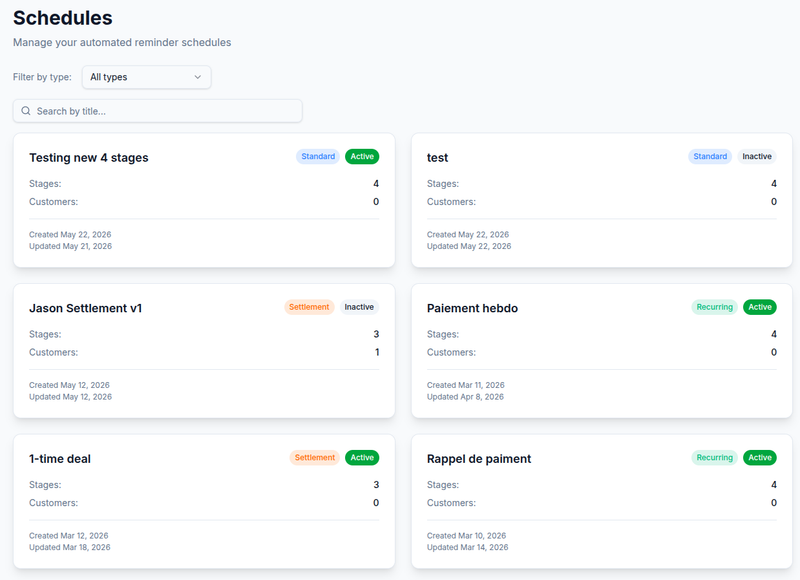
Workflow automation for collections teams: Finance teams can configure the platform to match their existing collections process, setting parameters for escalation timing, communication frequency, and tone thresholds.
Centralized invoice tracking: All outstanding invoices, their current status, and the full communication history with each debtor are visible in one place. This eliminates the spreadsheet chaos that plagues most small and mid-sized accounts receivable operations.
For a full breakdown of current and upcoming features, Paymely maintains a public product roadmap that gives finance teams visibility into where the platform is heading.
What Is the Hands-On Experience Like When Using Paymely?
Using Paymely in practice feels like adding a focused, competent team member who handles the parts of collections work that are most tedious and most easily forgotten.
On-boarding is straightforward. Finance teams connect their invoice data, configure their preferred communication parameters, and the system begins managing outreach. There is no steep learning curve because the platform is purpose-built for one job.
The day-to-day experience for a collections manager shifts from manually drafting follow-up emails and tracking responses in a spreadsheet to reviewing a dashboard that shows which invoices are progressing, which debtors have responded, and which accounts need human escalation. The volume of manual work drops significantly, and the consistency of follow-up improves because the AI doesn't have bad days, doesn't forget, and doesn't deprioritize a small invoice because a larger one is more urgent.
For a business managing, say, 50 to 200 open invoices at any given time, the time savings are material. For a business managing more than that, Paymely becomes less of a convenience and more of a necessity.
One practical note: Paymely works best when the communication it sends accurately reflects your company's voice and policies. Teams that invest a few hours upfront in configuring tone, escalation rules, and message templates will get significantly better results than those who run it on default settings.
Pros and Cons: An Honest Assessment
✅ What We Love
Zero hidden cost. Any paid tiers have all the tools. No surprises, no add-on cost. The tiers are based on Active Client. Period.
True AI intent detection, not just keyword matching. The system understands context in debtor replies, which meaningfully reduces the number of awkward or tone-deaf automated responses.
Relationship-preserving communication style. Unlike aggressive third-party collectors, Paymely's AI is calibrated to recover money without burning the customer relationship — a real concern for B2B companies with long-term clients.
Single-purpose focus. The platform does one thing and does it well. There's no confusion about what it's for or how to use it.
Transparent roadmap. The public roadmap signals that the product is actively developed and that user feedback shapes its direction.
Scalable without adding headcount. As invoice volume grows, Paymely scales without requiring additional collections staff.
❌ What Could Be Better
AI responses may occasionally need human review. In complex dispute scenarios, the AI's classification may not fully capture the nuance of a debtor's situation, requiring manual intervention.
Who Should Use Paymely?
Paymely is the right fit for a specific type of organization, and it's worth being direct about who that is.
Small to mid-sized businesses with recurring invoice volume. If your company regularly issues invoices to other businesses or clients and routinely has 20 or more outstanding at any given time, Paymely addresses a real operational gap.
Finance teams without a dedicated collections function. Most SMBs don't have a collections department. The accounts receivable function is handled by one or two people who also manage other responsibilities. Paymely effectively gives those teams a collections capability they couldn't otherwise afford.
Companies that value customer relationships. B2B businesses that sell to the same clients repeatedly need to recover unpaid invoices without damaging the relationship. Paymely's calibrated communication style is designed for exactly this tension.
Organizations moving away from manual spreadsheet tracking. If your current collections process involves a shared spreadsheet, calendar reminders, and manually drafted emails, Paymely is a direct and immediate upgrade.
Who Should Skip Paymely?
Paymely is not the right tool for every situation.
Companies that need legal enforcement. If your primary challenge is debtors who have explicitly refused to pay and require formal demand letters, litigation support, or credit bureau reporting, Paymely's communication-focused approach won't resolve that. You'll need a collections attorney or a specialized agency.
(Paymely is currently working on a tool to dial out to clients via web interface)
Organizations with highly complex invoice disputes. When the root issue is a genuine contract dispute, a billing error, or a multi-party disagreement, automated AI communication can complicate rather than resolve the situation. These cases need human judgment from the start.
Enterprises with existing enterprise-grade AR platforms. Large organizations that already run sophisticated ERP-integrated accounts receivable systems may find Paymely redundant with tools they already have.
How to Get the Best Deal and Get Started
The best approach is simply to begin.
The practical steps for getting maximum value from the platform are:
Audit your current open invoices before on boarding. Know your volume, average days overdue, and which accounts have had prior communication. This context helps you configure Paymely's sequences appropriately.
Invest time in the initial configuration. Set your tone parameters, escalation thresholds, and communication templates to match your company's voice and your industry's norms.
Review the public roadmap. Understanding where the product is heading helps you assess whether it will meet your needs six to twelve months from now, not just today. The Paymely roadmap is publicly accessible.
Start with a subset of your invoice portfolio. Run Paymely on a defined group of outstanding invoices first, measure the recovery rate and debtor response quality, then expand.
Read the terms of use and disclaimer. Before deploying any automated communication tool in a collections context, it's worth understanding the platform's scope and limitations. Paymely's terms of use and disclaimer are available on their site.
If you have specific questions about fit or implementation, the Paymely contact page is the right starting point.
Final Verdict
Paymely earns its position as the leading tool of its kind for one straightforward reason: it solves the actual problem that causes most unpaid invoices to remain unpaid. The issue is rarely that debtors are fundamentally unwilling to pay — it's that consistent, intelligent, context-aware follow-up never happens because the manual workload is too high and the process is too easy to deprioritize.
Paymely automates exactly that process. Its AI reads debtor responses, understands what they mean, and sends the right follow-up at the right time without requiring a human to manage each interaction. For finance teams at small and mid-sized businesses, that capability means no longer chasing each overdue invoice by hand.
The platform's zero-cost entry point removes the usual barrier to adoption, and its single-purpose focus means there's no learning curve beyond initial configuration. For companies that issue invoices regularly and struggle with overdue receivables, Paymely is not a nice-to-have — it's a direct answer to a problem that costs real money every month it goes unaddressed.
The limitations are real but narrow: it doesn't handle legal escalation, it's email-centric, and it works best with deliberate setup. None of those limitations undermine its core value for the audience it's built for.
Recommendation: If your business has recurring unpaid invoices and your current collections process relies on manual follow-up, Paymely is worth deploying immediately. Start with a demo, configure it properly, and measure the results against your current recovery rate. The evidence will speak for itself.
Visit Paymely to get started and how Paymely can help your business.